Scope 1 & 2
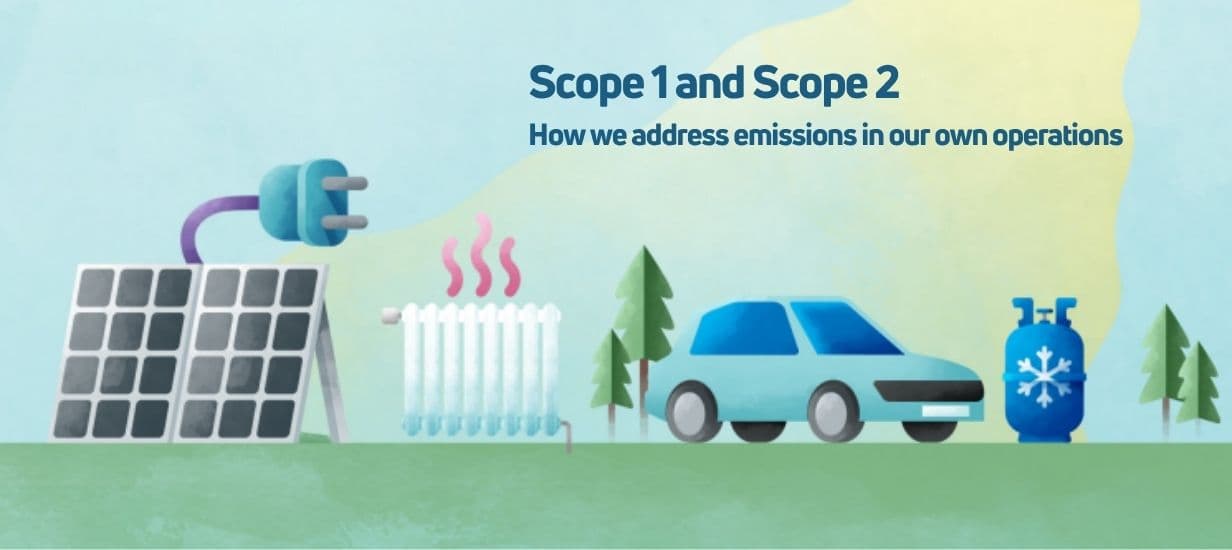
Reducing emissions from our own operations is a core part of our work within Good product. Emissions from Scope 1 and Scope 2 primarily come from fuel used by company vehicles, refrigerants, and energy use at our facilities. The electricity used in production is sourced from 100% renewable electricity and therefore represents a minimal share of Scope 2 emissions.
While Scope 1 and Scope 2 account for a smaller share of our total greenhouse gas emissions compared to Scope 3, they are areas where we have direct operational control and can implement effective technical and operational measures.
All TePe products manufactured in Sweden are produced using 100% renewable electricity, supported by our own solar park in Malmö. This transition was achieved prior to the base year for our climate targets. As a result, our current Scope 1 and Scope 2 efforts focus on remaining emission hotspots, including fuel use for company cars, refrigerants used in production and cooling systems, and energy use, including district heating.
Through continuous improvement, energy efficiency measures, and targeted investments, we work systematically to reduce emissions while maintaining high standards of quality, safety, and performance. Our work is guided by clear goals and targets aligned with science‑based methods, and progress is monitored regularly to inform priorities and operational decisions.
Key actions in our own operations
Improving energy use and heat loss in production
We use 100% renewable electricity in our production and have reduced our district heating use by 7% (in kWh) compared to 2024, and by a total of 64% (in kWh) since our 2019 base year. We also make better use of excess heat in our facilities to avoid energy waste.
Improving energy monitoring and analysis
We are improving how we monitor and analyse energy use so we can identify opportunities to save energy and optimise specific energy‑intensive equipment.
Transitioning to refrigerants with lower climate impact
Continuing the transition to refrigerants with lower global warming potential in production and cooling systems.
Transitioning to hybrid and electric company cars
Continuing the transition from fossil‑fuelled company cars to hybrid and electric vehicles.
Supporting lower‑emission commuting
Supporting lower‑emission commuting by providing electric vehicle charging stations and electric bike charging facilities.