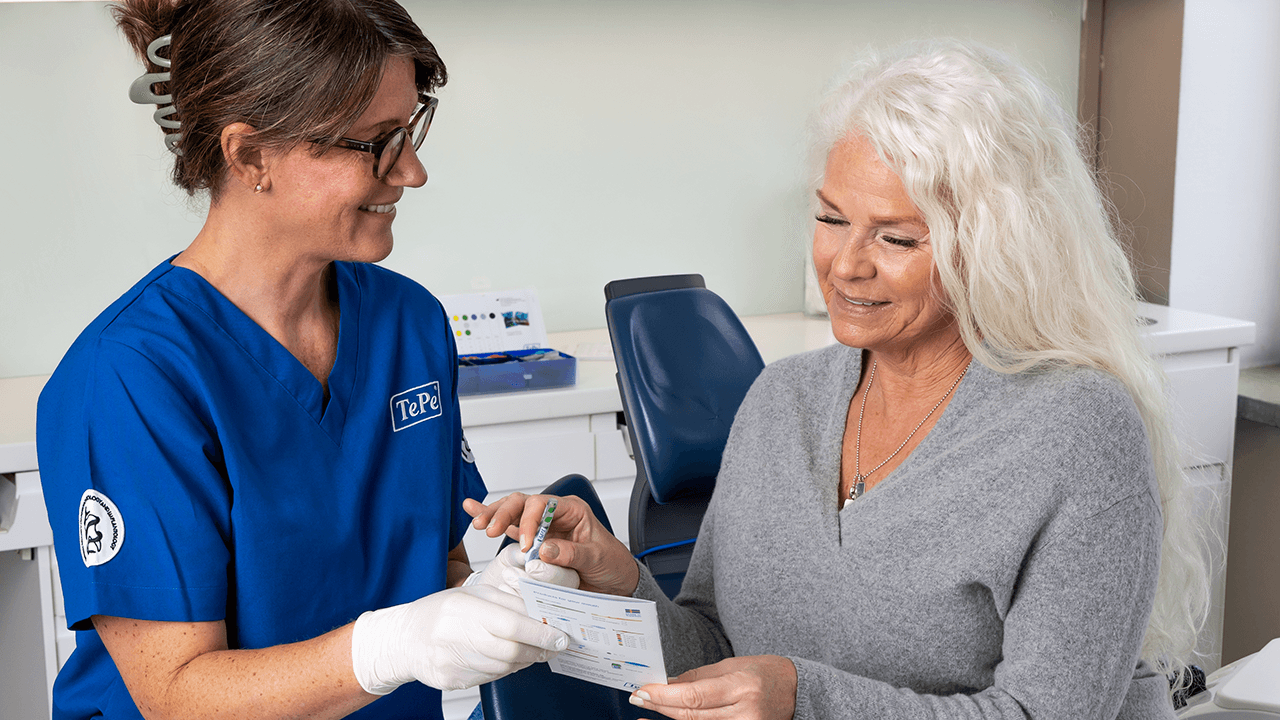
Develop your skills to build your patients’ trust
Effective communication and trust are fundamental to successful relationships and positive treatment outcomes in dental care. When dental professionals communicate clearly, listen actively, and show empathy, patients are more likely to feel understood, respected, and involved in their care. How do patients decide to trust or not trust a dental professional? Well, let’s find out by looking at a recent study that investigates patient trust in dentists.
Background
Trust is a vital part of the dental professional–patient relationship. It promotes better communication, care, and patient outcomes. Higher trust leads to fewer oral symptoms, improved quality of life, and greater satisfaction, whereas distrust can lead to care avoidance, poorer health, and stress for dental professionals. Low-income patients, who already face more oral health issues and barriers like cost and lack of insurance, are especially affected by poor trust in their dentists. This shows just how important it is to build trust to improve oral health, specifically in vulnerable populations.
Trust in dental professionals–patient relationships has unfortunately not been widely studied. To better understand trust in dentistry, the study in question used qualitative methods to explore how dentists build trust and its effects on patient experiences. If we look at the literature, it highlights competence, behavioural, and emotional aspects of trust, but it remains unclear which are most important to patients and how they influence how people seek dental care. Without awareness of how we can build trust, both dental professionals and patients may continue to face challenges related to distrust.
Study design and participants
In this study, Trust and Distrust in Dental Professionals: Patient Perceptions and Experiences, trust in dentists was explored from the perspective of patients with socioeconomic barriers. Patients, all 18 and above and with prior dental experience, were recruited from the One Smile programme* at Toronto University. 25 participants (18 female, 7 male) with a mean age of 38 were interviewed before or after their appointment with a dentist. The semi-structured interviews began with participants discussing their dental experiences. They were then asked to define trust, estimate how long it takes to build trust with a dentist, and describe its effects on the dentist–patient relationship. The questions focused on dentist qualities that affect trust, views on establishing trust, and how trust shapes decisions to seek dental care. Interviews lasted from 20 to 79 minutes.
Results
Thematic analysis was used to develop concepts from the collected data, meaning looking for patterns in what the participants had said. The interviews were recorded, written down, and then broken into smaller parts that captured important ideas. Similar ideas were grouped together into broader themes.
One main finding was that trust plays an important and changing role in the relationship between dentists and patients. Patients continually judge and re-evaluate their trust in the dentist while deciding to seek and continue treatment. This was explained through four main themes. The findings were illustrated using direct quotes from the people who were interviewed.
Theme 1: Patients’ perceptions of dentists’ technical skills and professional reputation were important for building patient trust.
48% of the participants reported that their decision to trust their dentist was based on their perception of the dentist’s competence, including his/hers technical skills and professional reputation. Not surprisingly, online reviews turned out to be important – just like in so many other areas today.
Supporting quote in creating trust: “The less pain I experience, then I trust more.”
Theme 2: Patients’ perceptions of dentists’ communication skills and empathy were important for building patient trust.
52% of participants reported that their decision to trust their dentist was based on their perception of the dentist’s communication skills and empathy. When patients were presented with treatment options and allowed to participate in the decision-making process, it also led to better trust.
Supporting quote in creating trust: “If they explain the process to me before starting, I trust them. I have to understand everything.”
Supporting quote in creating distrust: “My trust was broken because I was told one thing [by the hygienist] and then the dentist told me something different after.”
Theme 3: Patients varied in how they associated trust with cost and their previous dental experience.
Some participants said negative experiences made them less willing to trust a new dentist. Positive experiences seemed to make it easier to trust a new dentist. In short, opinions on cost and prior dental experiences varied widely.
Theme 4: Trust influenced patient decisions to proceed with dental treatment.
Before entering a clinic, trust can be established through a strong professional reputation. Once involved in treatment, themes 1 and 2 continued to be evaluated and reassessed. Patients who continue to trust their dentist tend to finish treatment and attend regular appointments. When distrust occurred, they often avoided care or chose a new dentist.
Closing remarks
Trust, of course, has many aspects and is personal, but some themes are common among many people. This study found new trust dimensions, including patients’ views of the dentist’s empathy and reputation, alongside previously known factors such as competence, emotional, and behavioural aspects. Communication is something we need to work on throughout our lives, but by practising and becoming better, dental professionals can help establish patient trust and, by doing this, help patients towards better oral health.